MRI vs CT Scan – Understanding the Differences, Uses, Costs, and Benefits
Medical imaging plays a crucial role in modern healthcare. When doctors need a detailed look inside the body, they often recommend either an MRI or a CT scan. Many patients wonder about ct scan vs mri, which test is more accurate, safer, or better suited for their specific condition. Understanding the differences between these imaging methods can help patients make informed decisions and better understand their healthcare journey.
This comprehensive guide explores mri vs ct scan, including their uses, advantages, limitations, costs, radiation exposure, and how they compare for diagnosing brain disorders, cancer, spine problems, and other medical conditions.
What Is a CT Scan vs MRI?
One of the most common questions patients ask is what is a ct scan vs mri. Both imaging tests create pictures of the inside of the body, but they use different technologies.
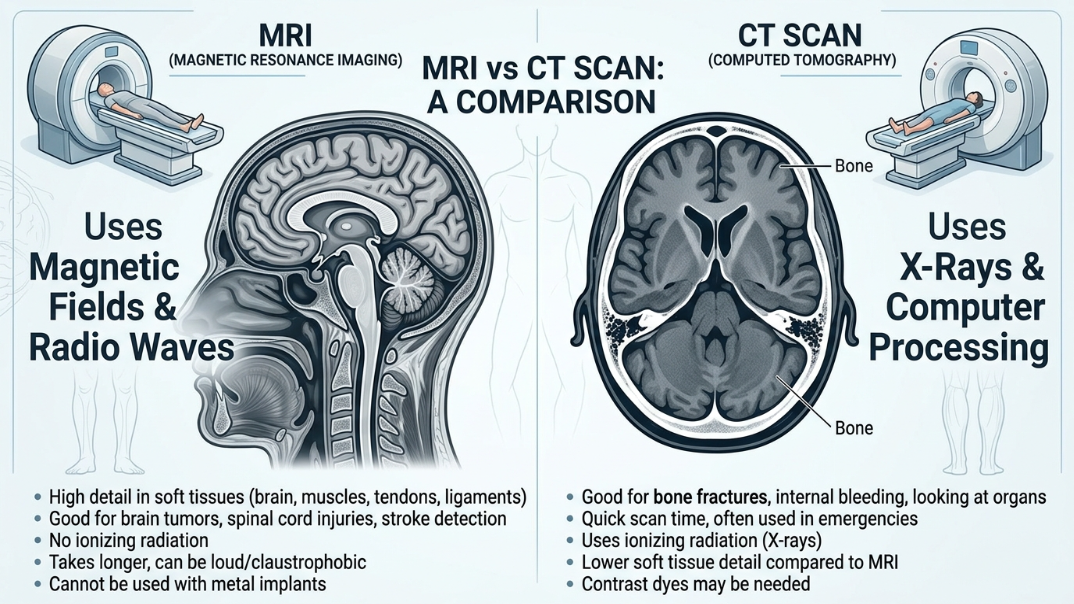
A CT scan, also known as computed tomography, uses X-rays and computer processing to create detailed cross-sectional images of organs, bones, and tissues. An MRI, or magnetic resonance imaging, uses powerful magnets and radio waves to generate highly detailed images of soft tissues.
When comparing ct scan vs mri scan or mri scan vs ct scan, the primary difference lies in how the images are produced and what structures they visualize best.
CT Scan vs MRI Difference and Comparison
Understanding the ct scan vs mri difference helps patients know why doctors choose one test over another.
CT Scan
- Uses X-rays
- Faster examination time
- Excellent for emergencies
- Better for viewing bones and acute bleeding
- Lower cost in most cases
MRI
- Uses magnetic fields and radio waves
- No ionizing radiation
- Superior soft tissue detail
- Ideal for brain, spinal cord, muscles, and ligaments
- Usually takes longer
When discussing ct scan vs mri comparison or mri vs ct scan differences, neither test is universally better. The right choice depends on the medical condition being investigated.
MRI vs CT Scan Machine
Many patients are curious about the equipment itself. The mri vs ct scan machine comparison reveals significant differences.
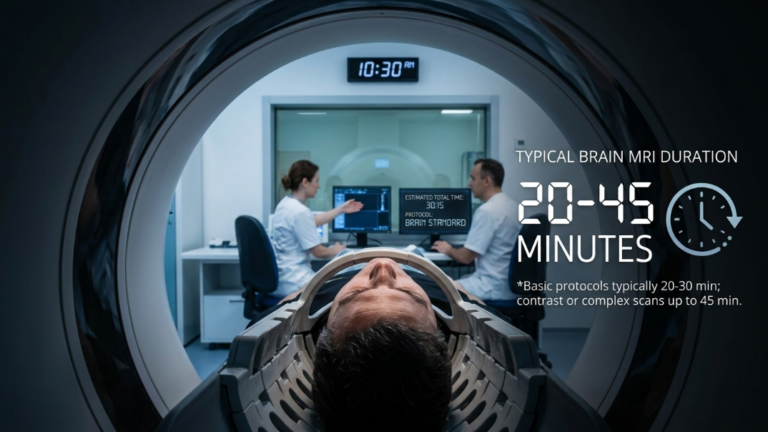
A CT scanner resembles a large donut-shaped machine through which the patient passes quickly. In contrast, an MRI scanner is a long cylindrical tunnel that surrounds the patient during imaging.
The terms mri machine vs ct scan, ct scan vs mri machine, ct scan vs mri machines, ct scan machine vs mri machine, and ct vs mri scan machine all refer to comparing these imaging systems.
CT machines are generally faster and less intimidating, while MRI machines provide more detailed soft tissue images but may feel uncomfortable for patients with claustrophobia.
CT Scan Radiation vs MRI
A major consideration for many patients is radiation exposure.
The comparison of ct scan radiation vs mri, mri vs ct scan radiation, radiation in ct scan vs mri, radiation ct scan vs mri, and radiation from mri vs ct scan is straightforward.
CT scans use ionizing radiation because they rely on X-rays. MRI scans do not use ionizing radiation and instead utilize magnetic fields and radio waves.
For patients requiring repeated imaging studies, MRI may be preferred when appropriate because it avoids radiation exposure.
CT Scan vs MRI Brain
Brain imaging is one of the most common reasons doctors order advanced imaging tests.
When comparing ct scan vs mri brain, mri vs ct scan brain, ct scan vs mri scan brain, brain ct scan vs mri, and brain mri vs ct scan, MRI generally provides more detailed information about brain tissue.
However, CT scans remain valuable in emergency situations because they are faster and readily available.
Brain Injury and Head Imaging
For head-related conditions, doctors may compare ct scan head vs mri, ct scan of head vs mri, ct scan of brain vs mri, ct scan vs mri of head, mri vs ct scan for head, ct scan vs mri for brain, and brain ct vs mri scan.
CT scans are often the first choice after trauma because they quickly identify skull fractures and bleeding. MRI is usually better for detecting subtle brain injuries and neurological disorders.
Brain Bleed
When evaluating ct scan vs mri brain bleed, CT scans are generally preferred initially because they rapidly detect acute bleeding in emergency situations.
Brain Tumor
Comparisons such as ct scan vs mri brain tumor and mri vs ct scan brain tumors typically favor MRI because it offers superior soft tissue detail and better tumor characterization.
Stroke Evaluation
When considering mri vs ct scan brain stroke or stroke mri vs ct scan, CT scans are often performed first to rule out bleeding. MRI may then be used for more detailed evaluation of brain tissue damage.
MRI vs CT Scan Cancer
Cancer diagnosis frequently involves advanced imaging.
The comparison of mri vs ct scan cancer, mri vs ct scan for cancer, ct scan vs mri for cancer, and ct scan vs mri for cancer detection depends on the type and location of the cancer.
CT scans are commonly used for initial cancer detection and staging because they can image large areas quickly. MRI is particularly useful for evaluating tumors in the brain, liver, prostate, breast, and spinal cord.
In many cases, doctors use both imaging methods together for comprehensive cancer assessment.
PET Scan vs CT Scan vs MRI
Patients undergoing cancer evaluation often hear about PET scans.
Comparisons such as pet scan vs ct scan vs mri, pet scan vs mri vs ct, pet scan vs ct vs mri, mri vs ct vs pet scan, ct scan vs mri vs pet, and ct scan vs mri vs pet scan involve three different technologies.
CT Scan
Provides detailed anatomical images.
MRI
Offers superior soft tissue visualization.
PET Scan
Shows metabolic activity and helps identify active disease.
PET scans are often combined with CT scans to improve cancer detection and monitoring.
MRI vs CT Scan vs X-Ray
Many patients also compare these tests with standard X-rays.
Terms such as mri vs ct scan vs xray, ct scan vs mri vs x-ray, ct scan vs mri vs x ray, ct scan vs mri vs xray, ct scan vs x-ray vs mri, x ray vs mri vs ct scan, xray vs mri vs ct scan, mri vs x ray vs ct scan, xray vs ct scan vs mri, x ray vs ct scan vs mri, and ct scan vs mri vs xray vs ultrasound are commonly searched.
X-Ray
- Fast and inexpensive
- Best for bones and fractures
- Limited soft tissue detail
CT Scan
- More detailed than X-rays
- Excellent for emergency imaging
MRI
- Best soft tissue visualization
- No radiation exposure
Ultrasound
- Uses sound waves
- Useful for pregnancy and many abdominal conditions
Cat Scan vs CT Scan vs MRI
Many people wonder about cat scan vs ct scan vs mri, ct scan vs cat scan vs mri, ct vs cat scan vs mri, cat scan vs ct vs mri, and ct scan vs mri vs cat.
A CAT scan and CT scan are actually the same procedure. CAT stands for Computed Axial Tomography, an older term that has largely been replaced by CT scan.
What Does a CT Scan Show vs MRI?
A common question is what does a ct scan show vs mri.
CT scans excel at showing:
- Bone fractures
- Internal bleeding
- Lung conditions
- Kidney stones
- Trauma-related injuries
MRI excels at showing:
- Brain tissue
- Spinal cord abnormalities
- Ligament injuries
- Muscle tears
- Joint disorders
CT Scan vs MRI Cost
Cost is often an important consideration.
Comparisons involving ct scan vs mri cost, mri vs ct scan cost, ct scan vs mri scan cost, ct scan vs mri price, mri vs ct scan price, cost of ct scan vs mri, and cost of mri vs ct scan generally show that MRI examinations are more expensive.
Factors affecting cost include:
- Geographic location
- Imaging center
- Body part being scanned
- Contrast use
- Insurance coverage
In most healthcare systems, MRI costs significantly more than CT imaging.
MRI Contrast vs CT Scan Contrast
Contrast agents improve image quality in certain situations.
The comparison of mri contrast vs ct scan contrast, ct scan contrast vs mri contrast, and mri vs ct scan with contrast involves different substances.
CT contrast typically contains iodine and is injected into a vein. MRI contrast commonly uses gadolinium-based agents.
Doctors choose contrast-enhanced imaging when additional detail is needed for evaluating blood vessels, tumors, infections, and inflammatory conditions.
MRI vs CT Scan Abdomen
Abdominal imaging frequently requires advanced scanning.
When comparing mri vs ct scan abdomen, mri vs ct scan for abdomen, ct scan vs mri for abdomen, and ct scan vs mri abdomen pelvis, CT scans are usually the first choice because they are faster and highly effective for evaluating abdominal organs.
MRI may be preferred when more detailed soft tissue assessment is required.
MRI vs CT Scan for Spine
The comparison of mri vs ct scan for spine typically favors MRI.
MRI provides excellent visualization of:
- Spinal discs
- Nerves
- Spinal cord
- Ligaments
For patients experiencing chronic back pain, discussions about ct scan vs mri for back pain often lead to MRI recommendations because it provides more information about soft tissue structures.
CT Scan vs MRI for Knee Injuries
Joint injuries often require advanced imaging.
Comparisons involving mri vs ct scan knee, ct scan vs mri for knee, and ct scan vs mri for knee injury usually favor MRI because it clearly visualizes cartilage, ligaments, tendons, and menisci.
CT scans may be preferred when evaluating complex fractures around the knee.
CT Scan vs MRI for Other Conditions
Shoulder Problems
The comparison of ct scan vs mri shoulder generally favors MRI because it provides excellent views of tendons, muscles, and ligaments.
Lung Conditions
When evaluating ct scan vs mri for lungs, CT scans are usually superior because they provide exceptional lung detail.
Kidney Stones
For ct scan vs mri for kidney stones, CT scans are considered the gold standard because they detect even very small stones.
Muscle Tears
Comparing ct scan vs mri for muscle tear, MRI is generally preferred because it shows soft tissue injuries in great detail.
CT Scan vs MRI Images
The terms ct scan vs mri images, ct scan images vs mri, ct scan vs mri imaging, and mri vs ct scan image refer to differences in image appearance.
CT images provide excellent detail of bones and dense structures. MRI images offer superior visualization of soft tissues and often reveal abnormalities that may not be visible on CT scans.
Pros and Cons of CT Scan vs MRI
Understanding the pros and cons of ct scan vs mri can help patients know what to expect.
CT Scan Advantages
- Fast imaging
- Excellent for emergencies
- Widely available
- Lower cost
CT Scan Disadvantages
- Radiation exposure
- Less soft tissue detail
MRI Advantages
- No radiation
- Superior soft tissue visualization
- Excellent diagnostic accuracy
MRI Disadvantages
- Higher cost
- Longer scan time
- More sensitive to patient movement
CT Scan vs MRI Claustrophobia
The issue of ct scan vs mri claustrophobia is important for many patients.
MRI scanners are enclosed and may cause anxiety in individuals with claustrophobia. CT scanners are generally more open and faster, making them easier for anxious patients to tolerate.
CT Scans vs MRI Scans
Whether searching for ct scans vs mri, ct scans vs mri scans, ct scans vs. mri scans, ct scan vs mri scan, ct scan vs. mri, mri vs. ct scan, or even ct scan vs mri español, the fundamental message remains the same: both imaging methods are valuable diagnostic tools.
Conclusion
The debate between ct scan vs mri and mri vs ct scan does not have a single winner. CT scans are faster, more affordable, and excellent for emergency situations, bone injuries, and detecting internal bleeding. MRI scans provide superior soft tissue detail, avoid radiation exposure, and are often preferred for brain, spine, joint, and muscle evaluations.
The best imaging test depends on the medical condition, the body part being examined, and the clinical question your healthcare provider needs answered. By understanding the differences between CT scans and MRI scans, patients can feel more informed and confident when discussing diagnostic options with their doctors.